
Hotel demand analysis has become one of the most important tools for hotels looking to remain competitive and profitable. The hospitality industry is evolving rapidly: technology, economic trends, and changing guest expectations are transforming the way travelers book accommodations. Understanding demand is no longer optional — it is what separates hotels that react too late from those that anticipate trends and optimize performance.
In this complete guide, we explain what hotel demand is, how hotel demand analysis works, how it is measured, the main factors that influence it, how to conduct it step by step, and the latest hospitality industry trends.
Table of Contents
What Is Hotel Demand?
Hotel demand refers to the level of interest travelers have, at a specific time, in booking accommodation in a hotel or destination. In other words, it is the number of people willing to pay for lodging in a certain location and period.
It is a key concept within the hotel business model and hotel management because it directly affects occupancy, revenue, operational planning, and strategic decision-making.
Hotel demand is also constantly changing based on seasonality, local events, tourism trends, traveler behavior, and economic conditions.
What Is Hotel Demand Analysis?
Hotel demand analysis is the process of evaluating the factors that influence the number of guests booking accommodations within a specific market or period. Through this analysis, hotels can forecast occupancy levels, optimize pricing strategies, and improve operational planning.
Rather than relying on intuition, hotels use data-driven forecasting models, historical booking trends, market behavior, and revenue management tools to make informed decisions.
How Is Hotel Demand Measured?
Measuring hotel demand involves analyzing both confirmed reservations and lost sales opportunities. Demand is not limited to rooms sold — it also includes cancellations, no-shows, and denied bookings due to lack of availability.
Hotels typically measure demand using key performance indicators such as:
- Room nights
- Occupancy rate
- ADR (Average Daily Rate)
- RevPAR (Revenue Per Available Room)
RevPAR is one of the most important hospitality KPIs because it reflects the hotel’s actual revenue performance based on its total room inventory.
Main Factors Affecting Hotel Demand
Hotel demand is influenced by multiple factors working together.
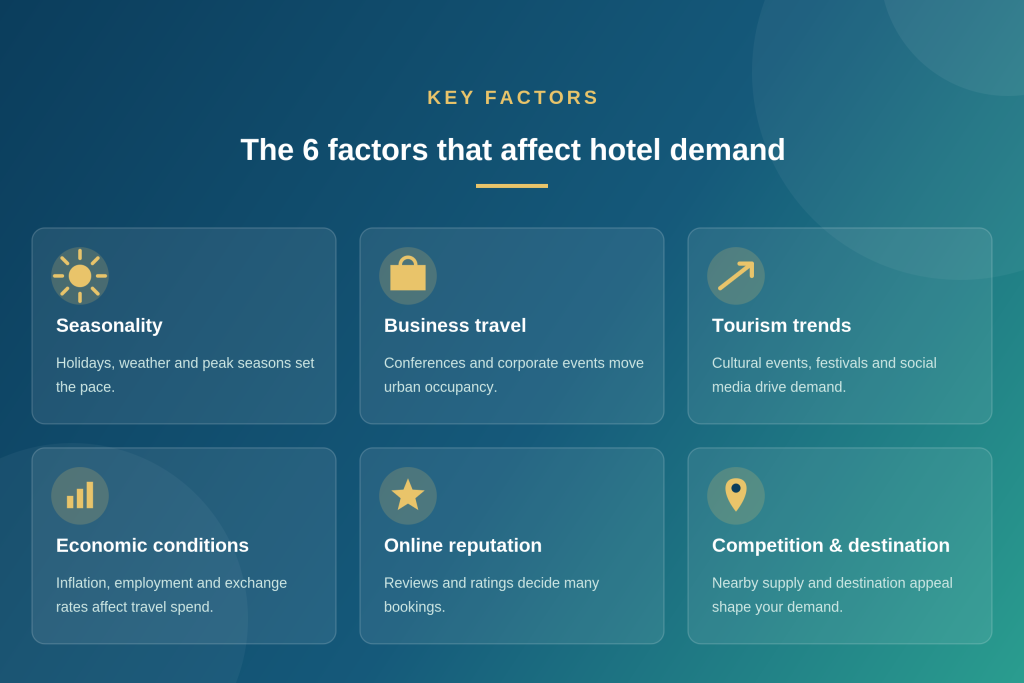
Seasonality is one of the most significant drivers, as demand fluctuates depending on holidays, weather conditions, and peak travel periods.
Corporate travel, conferences, and business events also have a major impact on occupancy, especially in urban destinations.
Tourism trends continue to shape demand, often influenced by social media, cultural events, and changing traveler preferences.
Economic conditions such as inflation, employment levels, and exchange rates directly affect travel spending.
A hotel’s online reputation also plays a critical role in booking decisions and should be part of a strong hotel online reputation strategy.
Finally, local competition and the attractiveness of the destination itself strongly influence hotel demand.
Why Is Hotel Demand Analysis Important?
Hotel demand analysis allows hotels to improve strategic decision-making and maximize profitability.
Its main benefits include:
- Optimizing revenue management strategies
- Applying dynamic pricing models
- Reducing low-occupancy periods
- Improving staffing and operational planning
- Creating more effective marketing campaigns
Hotels that implement advanced hotel revenue management strategies can significantly increase annual revenue, in some cases by up to 20%.
How To Conduct a Hotel Demand Analysis Step by Step
1. Segment Your Demand
Identify different guest profiles such as leisure travelers, business travelers, families, groups, and digital nomads, since each segment behaves differently in terms of booking patterns and price sensitivity.
Understanding different hotel guest types helps hotels personalize their strategy and improve forecasting accuracy.
2. Analyze Historical Data
Review occupancy, ADR, RevPAR, and reservation trends from previous years to identify recurring demand patterns.
3. Study the Competition
Monitor competitor pricing, availability, and positioning within your comp set.
4. Include External Factors
Events, holidays, weather forecasts, and economic conditions should all be integrated into the analysis.
5. Use Technology
Forecasting systems and revenue management tools help hotels predict demand more accurately and automate pricing decisions.
6. Turn Insights Into Decisions
Adjust pricing strategies, distribution channels, and operational planning based on forecasted demand.
Current Hospitality Industry Trends
Traveler behavior continues to evolve rapidly. Today’s guests increasingly value personalized experiences tailored to their preferences.
Sustainable tourism is also becoming a major factor in accommodation choices, aligning with broader hospitality sustainability strategies discussed in sustainable hospitality and guest experience.
At the same time, digital check-in processes and smart hotel technologies are transforming operations and guest experiences, as seen in the rise of smart hotels and hospitality technology.
Another growing trend is “bleisure” travel, which combines business and leisure within the same trip.
These changes are also reinforcing the importance of direct bookings, digital visibility, and strong online positioning through effective hotel marketing strategies.
From Data to Decisions
Hotel demand analysis is not just about numbers — it is about understanding traveler behavior, motivations, and how guests interact with the market.
In an increasingly competitive hospitality industry, the ability to transform data into strategic decisions is what separates average-performing hotels from highly profitable ones.




