
How much does a hotel feasibility study cost? A guide for developers and investors
How much does a hotel feasibility study cost? Learn what drives the fee, the main scope tiers, timelines and how to compare proposals before you hire.
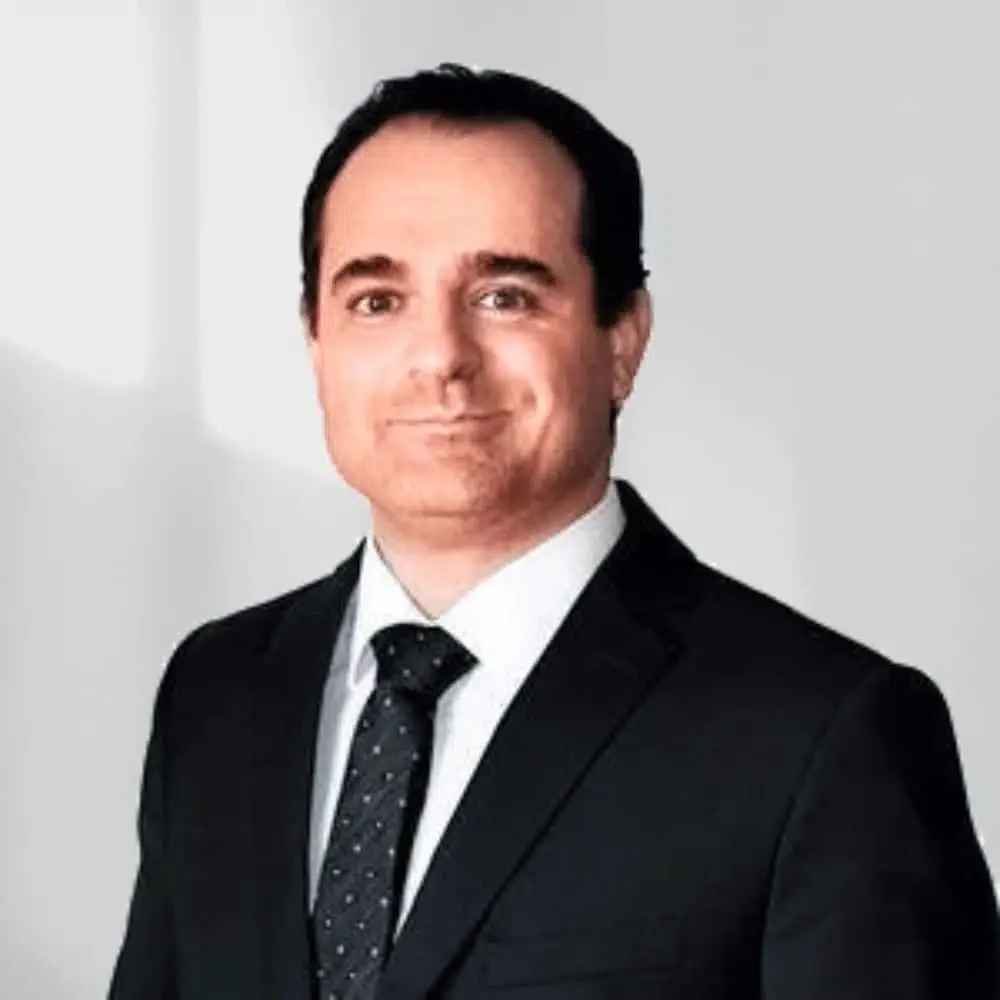 Juan Pedro LemesManaging Director · IHCS
Published 10 min read
There is no list price for a hotel feasibility study. The fee depends on scope (a market study alone or a full feasibility study with a financial model), on the size and complexity of the project, and on who will rely on the report: a study for your own go/no-go decision is a different product from one that has to survive a lender's credit committee. As a broad, indicative guide, fees in the market run from a few thousand dollars or euros for a focused market assessment to several tens of thousands for a bank-grade study of a complex project, and they vary widely by country, scope and team.
What you can control is what that money buys, and that is what this guide is about. For the methodology itself, see our guide on how a hotel feasibility study protects capital.
What you are actually paying for
A feasibility study answers one question: can this hotel, on this site, with this concept and this number of keys, generate enough revenue to cover operating costs, debt service and the return your capital requires? It answers it in three layers:
- Market: demand by segment, existing and pipeline supply, rates and seasonality.
- Product: concept, positioning, room count, facilities and the space program the market will support.
- Numbers: revenue and cost projections, total development budget and the resulting returns.
The fee reflects how deep each layer goes, and how much professional responsibility the consultant takes on by putting their name to the conclusions.
What drives the cost of a hotel feasibility study
Scope: market study or full feasibility study
This is the biggest driver. A market study tells you whether there is demand and at what rate. A full feasibility study adds the building program, the development budget, a departmental operating forecast and investment returns. Developers often ask for "a feasibility study" when a market study is all they need at that stage, or commission a market study and expect it to satisfy a lender. Getting the scope right is how you avoid overpaying or underbuying.
Project size and complexity
Room count matters less than the number of revenue streams. A select-service hotel in a city has a relatively simple P&L. A resort with several restaurants, a spa, a beach club, meeting space or villas has to be modelled department by department, each with its own demand, pricing and cost structure.
Location and data availability
Mature markets have reliable benchmarking data and well-documented supply. In emerging destinations, secondary markets and much of Latin America, the Caribbean or Africa, much of that information has to be built from scratch through local interviews, a supply inventory and rate shopping. That primary research costs more, but it is often where the real insight comes from.
Site visits and fieldwork
A credible study includes at least one visit by the lead consultant to assess access, visibility, surroundings and the competitive set first-hand. Days on the ground and travel, particularly international travel, are part of the cost.
Number of scenarios
Testing one concept is not the same as comparing three (say, an upscale city hotel, an extended-stay product and a lifestyle hotel), two room counts, or different operating structures: owner-operated, leased or under a management agreement. Each option needs its own projection.
Lender and investor requirements
A study that goes to a bank or a fund needs traceable assumptions, sensitivity analysis and the signature of an independent consultant with a verifiable track record. The consultant may also need to answer the lender's questions, provide a reliance letter or update the study if financing drags on.
Independent or branded
If the hotel will fly a flag, the study has to test fit with brand standards, include franchise or management fees, reservation and loyalty costs and, often, compare offers from several brands, including any key money on the table. For conversions, it should also account for the property improvement plan (PIP). An independent hotel needs more work on concept, positioning and distribution costs, because it has no brand engine behind it. Neither is cheaper by default; they are different jobs.
Mixed-use projects
When the hotel sits alongside branded residences, retail, offices or standalone F&B, each component has its own market and its own economics: sale, lease or operation. The study must assess each one and then integrate the interactions, such as shared areas, parking and common costs.
Three scope tiers
Most engagements fall into one of three tiers. Durations are indicative and assume the client provides project information on time.
| Tier | What's included | Typical duration | Who it's for |
|---|---|---|---|
| 1. Market and concept assessment | Site review, demand by segment, existing and pipeline supply, positioning, recommended concept and room count, preliminary occupancy and ADR | 3–5 weeks | Landowners and developers at an early stage deciding whether to proceed |
| 2. Full feasibility study | All of the above plus space program, development budget, departmental operating forecast to stabilization, return metrics and sensitivity analysis | 6–10 weeks | Developers and investors about to acquire land or commit equity |
| 3. Bank/investor-grade feasibility with financial model | All of the above plus an integrated, editable financial model, debt structure and coverage ratios, multiple scenarios and support through lender or investor review | 8–14 weeks | Projects seeking construction financing, equity partners or brand and operator negotiations |
The most capital-efficient route is usually staged: start with tier 1 and, if the answer is positive, move to tier 2 or 3. Ask upfront whether the first-phase work rolls into the next, so you do not pay for the same market analysis twice.
The real step up from tier 2 to tier 3 is the model. A well-built one lets you change any assumption and immediately see its effect on returns and debt capacity; we explain why that matters in how a hotel development financial model creates value.
How long does a feasibility study take?
What stretches the timelines above is rarely the analysis itself. It is missing project information, waiting on meetings with brands or operators, concept changes mid-study and review rounds with lenders. Be wary of a one-week turnaround on a project of any size: it rarely includes genuine fieldwork.
What the deliverable should contain
Whatever it is called, a full feasibility study should include at least:
- An executive summary with a clear conclusion: feasible, not feasible or feasible under specific conditions.
- Site and location analysis, including access and surroundings.
- Demand by segment, with seasonality.
- Existing competitive supply and the new-supply pipeline.
- Recommended concept, room count and space program.
- Occupancy, ADR and RevPAR year by year through stabilization, not just a single "typical year".
- A departmental operating forecast in a format operators and lenders recognize, such as USALI.
- A development budget: land, hard costs, soft costs, FF&E, pre-opening and contingency.
- Return metrics: IRR, NPV, payback and yield on cost.
- Sensitivity analysis and alternative scenarios.
- Explicit assumptions and data sources.
- The financial model in an editable format, where it is in scope.
Red flags of a cheap study
The problem with a cheap study is not the price. It is the false comfort it gives you right before you commit capital. Watch for:
- Template reports: pages of generic tourism data and very little about your site.
- No site visit.
- Occupancy and ADR with no defined competitive set: without knowing which hotels you will compete with and how they perform, the numbers have no anchor.
- No ramp-up: a new hotel does not hit stabilized performance in year one; projecting it that way inflates returns.
- Missing costs: pre-opening, FF&E reserve, management or brand fees, distribution costs.
- A single scenario: you cannot see what happens if rate or occupancy come in below plan.
- The answer you wanted to hear, with no caveats or conditions.
- A locked model: if you cannot see the assumptions, you cannot test them or defend them to a lender.
- No operating experience: payroll and cost assumptions need someone who has run hotels, not just spreadsheets.
How to compare proposals
Two proposals with very different prices rarely describe the same work. Before comparing numbers, compare scope:
- Deliverables: does it include a financial projection, an editable model and sensitivity analysis, or only a market study?
- Fieldwork: how many site visits and days on the ground, and who actually travels?
- Scenarios: how many concepts, room counts or operating structures are tested?
- Audience: is it built for lenders or investors, and does the fee include answering their questions?
- Team: who does the work and who signs it? Do they know your market and your asset type?
- Independence: does the consultant have any stake in the outcome, such as a linked operator or a fee that depends on the project going ahead?
- Revisions: how many review rounds are included, and what does a later update cost?
- Expenses and payment terms: is travel included, and how are milestone payments structured?
A serious proposal comes after a scoping call. If someone quotes a fixed fee without asking about the site, the concept, the intended audience and your timeline, they are probably selling a template. For an overview of how consulting fees are typically structured, see our article on hotel consulting cost.
Why a good study pays for itself
A feasibility study's fee is a small fraction of what it costs to build a hotel, and the mistake it helps you avoid is measured in millions.
Take a purely illustrative example. A developer plans a 120-key hotel at a hypothetical cost of $200,000 per key, a $24 million project. If the study shows the market can only support 95 keys at the target rate, the 25 keys not built represent $5 million of capital that is not tied up in rooms with no demand. If you have not pinned down that number for your own project, start with our guide to hotel cost per key.
Beyond sizing the hotel correctly, a good study:
- Lets you walk away from a site before closing, while exiting is still cheap.
- Avoids costly redesigns, because your architect works from a program the market has validated.
- Strengthens your financing case with assumptions you can defend.
- Gives you your own numbers to negotiate with brands and operators, rather than relying on theirs.
No study guarantees a hotel's success. What it does is reduce the odds of the most expensive mistake in this business: building the wrong hotel in the wrong place.
When to commission the study
The right time is before the big decisions become irreversible:
- Before closing on the land, ideally during the due diligence or option period.
- Before schematic design, so the program comes from the market and not the other way round.
- Before negotiating with brands or operators.
- Before approaching lenders, with the scope they will require.
- When converting a building or repositioning an existing hotel.
Every market has its own demand drivers, regulations and financing norms. If your project is in the United States, see how we approach a hotel feasibility study in the USA; for projects in Spain, see our hotel feasibility study in Spain.
Frequently asked questions
How much does a feasibility study cost for a small or boutique hotel?
Less than for a resort, but not in proportion to the room count: the market analysis and site visit take similar effort whatever the size. For small and boutique hotels it usually makes sense to start with a market and concept assessment and expand the scope only if the project moves forward.
What is the difference between a market study and a feasibility study?
A market study assesses demand, supply and achievable rates and occupancy. A feasibility study goes further, adding the development budget, the operating forecast and investment returns to answer whether the project makes financial sense. Always confirm which one a proposal actually covers.
How long does a hotel feasibility study take?
As a rough guide, three to five weeks for a market and concept assessment, and two to three months or more for a bank-grade study with a full financial model. The actual timeline depends on the project's complexity and how quickly the project information is available.
Will a lender accept my feasibility study?
It depends on who prepares it and how. Lenders look for an independent consultant with relevant experience, documented assumptions and sensitivity analysis, and in many markets they will also order their own appraisal. If you plan to seek financing, say so before you hire so the scope reflects it from day one.
Can I do the feasibility study myself?
An internal back-of-the-envelope model is a sensible way to screen ideas. But a template cannot replace market knowledge or the operating experience behind an occupancy, rate or cost assumption, and it is unlikely to convince a lender or investor.
Request a proposal
IHCS Hotel Consulting has 27 years of experience developing and assessing hotel projects, with more than 150 projects on four continents. We do not work from a rate card: every proposal starts with a conversation about your project, so the scope matches what you actually need.
To prepare one, we need the location, the site or building, the concept you have in mind, your timeline and whether the study will go to a lender or investors. Tell us about your project through our hotel development and feasibility services and we will send you a proposal with a defined scope, timeline and fee.
About the author
Juan Pedro Lemes
Managing Director of IHCS Hotel Consulting. 27 years developing, opening and running hotels, and advising owners and investors across Europe, the Americas, Asia and Africa.
Meet Juan Pedro →